

In partnership with


How government officials across 47 states are systematically defrauding American homeowners through illegal property appraisals, and why the municipal bond market collapse could destroy your retirement.
The Fraudster's Favorite Climate: How Economic Pressure Creates Perfect Storms
GM, Welcome Back to the Dead Drop
Picture this: It's 1920, and Boston is buzzing with post-war optimism. A charming Italian immigrant named Charles Ponzi is promising investors 50% returns in 45 days through an "arbitrage opportunity" involving international postal coupons. Meanwhile, across the world, economic uncertainty from World War I's aftermath is making people desperate for financial security.
Sound familiar? It should. Because what I'm about to reveal isn't just history; it's the playbook that fraudsters have been using for over a century, and it's happening right now at unprecedented scale.
The Criminal's Economic Weather Report
This long into my tenure, I have concluded that fraud and economic pressure move together like a predator following wounded prey.
The data tells a chilling story:
Historical Fraud Spikes During Economic Downturns:
Early 1980s: 5.6% increase in fraud following a 3% GDP fall
1990s recession: 9.9% increase in fraud following a 1.7% GDP decline
2008 Financial Crisis: 7.3% increase in fraud following a 2.1% GDP drop
But here's what the statistics don't capture: the psychological transformation that economic pressure creates in both criminals and victims.
The Perfect Storm Psychology
Phase 1: The Desperation Factory
Economic downturns don't just destroy wealth, they manufacture desperation. And desperation is the fraudster's favorite raw material.
For Victims:
Financial stress clouds judgment
"Fear of Missing Out" (FOMO) on recovery opportunities intensifies
Rational skepticism gets overwhelmed by hope
Social proof becomes dangerously powerful ("Everyone else is investing...")
For Criminals:
Expanded victim pool as financial stress spreads
Reduced oversight as companies cut fraud prevention staff
Increased rationalization ("The system is rigged anyway")
Greater sympathy from potential accomplices facing their own financial pressure
Phase 2: The Authority Vacuum
During economic crises, traditional financial institutions lose credibility. This creates what I call an "authority vacuum", a dangerous void that fraudsters rush to fill.
Charles Ponzi understood this perfectly. In 1920, banks were offering 5% annual returns while he promised 40% in 90 days. The post-war economic uncertainty made people distrust traditional institutions and seek alternatives.
Modern Application: Today's cryptocurrency frauds operate the same way. Blockchain technology and DeFi protocols are complex and opaque. Most investors don't understand smart contracts or liquidity pools. So when scammers present fraudulent investment opportunities with technical jargon and fake authority, many people accept them as legitimate innovations.
Phase 3: The Complexity Shield
Sophisticated frauds always hide behind complexity. Ponzi claimed his profits came from exploiting international postal coupon arbitrage, complex enough that most investors couldn't verify it, simple enough that it sounded plausible.
The 2008 Pattern: Mortgage-backed securities, credit default swaps, and synthetic CDOs were so complex that even the banks selling them didn't fully understand the risks. Complexity became a weapon of fraud.
Today's Cryptocurrency Fraud: The same pattern. Scammers hide behind blockchain jargon, DeFi complexity, and technical terminology. Most investors can't challenge something they don't understand, especially when it's wrapped in the authority of "revolutionary technology."
The Historical Fraud Evolution
The Great Depression: Crime's Golden Age
The 1930s weren't just economically devastating, they were a criminal innovation lab. Bank robberies increased, but more importantly, white-collar fraud exploded as desperate people with access to money tried increasingly elaborate schemes to avoid financial ruin.
Key Insight: The most dangerous fraudsters during the Depression weren't career criminals, they were previously honest professionals pushed past their breaking point by economic pressure.
The 2008 Financial Crisis: Fraud at Scale
The 2008 crisis revealed something terrifying: systematic fraud at institutional levels. It wasn't just individual bad actors, entire systems became corrupted by economic pressure.
Pattern Recognition:
Mortgage originators fraudulently inflated incomes
Appraisers systematically overvalued properties
Rating agencies gave fraudulent AAA ratings to toxic securities
Banks packaged known-bad loans and sold them as investments
Each link in the chain rationalized their fraud: "Everyone else is doing it," "The system is broken anyway," "I'm just trying to survive."
Today's Cryptocurrency Fraud: The Perfect Historical Echo
What we're seeing now with cryptocurrency fraud follows the exact same pattern, but leverages modern technology:
The Economic Pressure: Traditional financial system instability and inflation fears The Rationalization: "I'm getting in early on revolutionary technology"
The Complexity Shield: Blockchain technology and DeFi protocols
The Authority Vacuum: Distrust of traditional banking creates acceptance of unregulated alternatives
The Systemic Risk: From exchange operators to influencers to "DeFi protocols"
The Criminal Psychology Deep Dive
Why Economic Pressure Creates Fraudsters
Through interrogating hundreds of white-collar criminals, I've identified the psychological transformation that economic pressure creates:
Stage 1: Rationalization "I'm not stealing, I'm borrowing." "I'll pay it back when things get better." "The system is unfair anyway."
Stage 2: Incremental Escalation Small violations lead to larger ones. Each successful fraud reduces inhibitions for the next one.
Stage 3: Identity Shift The person stops seeing themselves as temporarily criminal and starts seeing themselves as cleverly adaptive.
Stage 4: Systematic Operation What started as desperate improvisation becomes professional criminal enterprise.
Why Economic Pressure Creates Victims
Cognitive Load Theory: Financial stress literally reduces cognitive capacity, making people more susceptible to manipulation.
Social Proof Amplification: In uncertain times, people rely more heavily on what others are doing, making them vulnerable to artificial social proof.
Authority Bias Intensification: During crises, people become more deferential to perceived authority figures.
Modern Fraud Patterns: The Digital Acceleration
Economic pressure in 2024-2025 is creating fraud opportunities that Charles Ponzi couldn't have imagined:
AI-Powered Scams: Deepfakes and voice cloning scale fraud beyond human capacity
Cryptocurrency Complexity: Digital assets create new complexity shields
Social Media Manipulation: Artificial social proof at unprecedented scale
Remote Work Vulnerabilities: Reduced oversight and verification
But the fundamental psychology remains identical to 1920.
The Fraudfather Bottom Line
Economic pressure doesn't just increase fraud, it transforms ordinary people into criminals and intelligent people into victims. Understanding this pattern is critical because we're entering a period of unprecedented economic uncertainty.
The Pattern Recognition System:
Monitor Economic Indicators: Rising unemployment, inflation, market volatility
Watch for Authority Vacuum: Declining trust in traditional institutions
Identify Complexity Shields: New "opportunities" that are hard to understand
Recognize Rationalization Language: "Everyone else is doing it," "It's not really fraud"
Track Systematic Corruption: When entire industries or government systems show similar problems
Current Threat Assessment: We're in the early stages of what could be the largest fraud epidemic in American history. Cryptocurrency fraud, AI-powered scams, and social engineering attacks are converging with economic uncertainty to create perfect storm conditions.
The Criminal Psychology Truth: The most dangerous fraudsters aren't the obvious criminals, they're the previously honest professionals who convince themselves they have no choice.
Your Defense Strategy: Understand that economic pressure makes everyone more vulnerable, including you. When financial stress increases, increase your skepticism proportionally. The more desperate you feel, the more careful you need to be.
Historical Lesson: Every major economic crisis in history has been followed by the discovery of massive fraud that was "hiding in plain sight." The question isn't whether this is happening now, it's whether you'll recognize it before you become a victim.
Monitor. Verify. Act.
The economic weather report for fraud is currently: SEVERE STORM WARNING.
How to Choose the Right Voice AI for Regulated Industries

Explore how enterprise teams are scaling Voice AI across 100+ locations—without compromising on compliance.
This guide breaks down what secure deployment really takes, from HIPAA and GDPR alignment to audit logs and real-time encryption.
See how IT, ops, and CX leaders are launching secure AI agents in weeks, not months, and reducing procurement friction with SOC 2–ready platforms.

While you've been watching for phishing emails and romance scams, the most brazen theft in American history has been hiding in plain sight on your property tax bill.
The Property Tax Fraud Conspiracy: A Dead Drop Investigation
You thought the sophisticated fraudsters were limited to Wall Street and Silicon Valley? Think again. While you've been watching for phishing emails and romance scams, the most brazen theft in American history has been hiding in plain sight on your property tax bill.
What I'm about to share with you isn't theory. It's documented evidence of a systematic conspiracy involving thousands of government officials across 47 states, stealing an estimated $1 trillion from American homeowners through fraudulent property appraisals. This isn't hyperbole. This is intelligence gathered from whistleblowers, court documents, and the perpetrators' own records.
The Criminal Playbook
The most dangerous criminals aren't the ones who threaten you; they're the ones who understand exactly what you need to hear. In this case, what you "needed to hear" was that your skyrocketing property taxes were simply "market conditions."
Here's how the scheme works:
Phase 1: Budget-Driven "Appraisals"
Central Appraisal Districts (CADs) receive predetermined budgets from taxing entities like school districts, who submit their financial needs to the chief appraiser. The chief appraiser then "goal-seeks" property values to meet those budget numbers, completely abandoning any pretense of actual market valuation.
This isn't appraisal; it's extortion with spreadsheets.
Phase 2: USPAP Violations at Scale
The Uniform Standards of Professional Appraisal Practice (USPAP) exists specifically to prevent this type of manipulation. Yet evidence shows CADs systematically violate these standards by using inappropriate comparables, manipulating data in Excel, and manually overriding their Computer Assisted Mass Appraisal (CAMA) software.
In Denton County, Texas alone, investigators found databases that are over 76% corrupted due to this manipulation.
Phase 3: Constitutional Violations
The fraud goes deeper than illegal appraisal practices. This scheme violates the 16th Amendment by essentially taxing unrealized gains; appreciation in property value is not income until the property is sold and the gain realized.
Phase 4: Systemic Cover-Up
State officials, including the Texas State Comptroller, have ignored formal complaints and instructed their agencies to "stand down" rather than prosecute violations of appraisal laws.
The Scope of the Conspiracy
This isn't isolated to one county or state. Mitch Vexler, the primary whistleblower exposing this fraud, has confirmed the practice exists across 47 states with hard data and insider testimony.
The Numbers:
Denton CAD alone created $67 billion in property overvaluation between 2017-2023, resulting in $1.34 billion in excess tax collection
Extrapolated across the country's 3,143 appraisal districts, this represents nearly $1 trillion stolen from taxpayers
37% of American households are exposed to bankruptcy or losing their homes due to this systematic overvaluation
The Municipal Bond Time Bomb
Here's where this gets interesting from a financial systemic risk perspective. These fraudulent property valuations serve as the foundation for municipal bond issuances. When the bonds are backed by inflated tax revenues based on illegal appraisals, the entire municipal bond market, worth $3.7 trillion, faces systemic risk.
The Bond Shell Game
Municipalities employ multiple types of debt instruments, many of which circumvent voter oversight entirely:
General Obligation (GO) Bonds: Backed by the issuer's "full faith and credit," including its power to tax. General obligation bonds typically require voter approval and are subject to limits on total debt outstanding. These represent only 28% of the municipal market.
Revenue Bonds: Revenue bonds and bonds secured by anticipated legislative appropriations are not subject to these requirements or limits. In 2018, roughly 58 percent of state and local issuances were revenue bonds. These bonds are backed by specific revenue streams and don't require voter approval.
Certificates of Participation (COPs): The most insidious debt instrument. COPs are the most popular form of appropriation-supported debt. One of the main reasons for their popularity is that, in many states, COPs are not considered a "debt" and thus do not require prior voter approval before issuance. COP issuance has increased greatly over the years because they are easier to issue than G.O. debt (no pesky debt limits or voter approval to deal with).
Special Tax Bonds: Special Tax Bonds generally do not require voter approval; however, voter approval of the underlying taxes may be required. These are backed by specific tax streams like sales or hotel taxes.
When the Music Stops
What happens when municipalities can't make their bond payments? The answer reveals the true criminal nature of this scheme:
The Debt Spiral: School districts are already bankrupt. We've even found they haven't paid off a single bond in years. They just keep rolling them over at higher interest rates. Instead of amortizing debt, they're compounding it. This creates a death spiral where new debt is issued just to service old debt.
Tax Increases or Insolvency: When municipalities face budget shortfalls, they have three options:
Raise property taxes further (pushing more homeowners into bankruptcy)
Issue more bonds to pay existing bonds (creating a Ponzi scheme)
Default and bankruptcy (destroying pension funds and investor portfolios)
The Pension Fund Connection: Almost all the $3.7 trillion in outstanding municipal debt is tied to essential services such as education, public safety, electricity, water and waste treatment. But this debt is also intertwined with pension obligations. In Detroit's bankruptcy, pensioners of the city were paid around 82 cents on the dollar, and holders of unlimited tax general obligation (ULTGO) bonds around 75 cents on the dollar.
Historical Default Patterns: Municipal defaults continue to remain historically rare. Moody's published its annual municipal default and recovery study, which highlighted a significant drop-off in Moody's-rated defaults since Puerto Rico's defaults in 2016 and 2017. A single Moody's-rated issuer defaulted in 2023, continuing a trend of relatively low default rates for the municipal asset class versus corporates. The 10-year cumulative default rate for investment-grade municipal bonds has been just 0.1% since 1970, compared to 2.2% for investment-grade corporate bonds.
The ZIRP Masquerade: However, these low default statistics are misleading. The disconnect between predicted municipal bond defaults and actual extremely low default rates can be explained by the Zero Interest Rate Policy (ZIRP) era and its aftermath. During the extended period of near-zero federal interest rates (2008-2022), municipalities enjoyed unprecedented access to cheap capital, allowing them to "extend and pretend", rolling over debt indefinitely rather than facing genuine solvency tests.
The Refinancing Shell Game: Zero percent interest rates allowed municipalities to engage in financial engineering rather than genuine fiscal health improvement. Instead of addressing underlying structural problems (pension obligations, declining tax bases, infrastructure costs), they simply refinanced their way out of immediate payment crises. The Federal Reserve's implicit backstop of the municipal bond market during COVID-19 sent a clear signal that municipalities were "too systemically important to fail," keeping borrowing costs artificially low and preventing market discipline that would normally force defaults.
The Coming Reckoning: Current low default rates don't reflect genuine financial health; they reflect financial life support. As interest rates normalize and refinancing becomes more expensive, municipalities that have been living on this support may finally face their day of reckoning. The property tax fraud scheme represents a desperate attempt to inflate revenue bases before this inevitable adjustment occurs.
The Systemic Risk: When investors realize that Sixty-Two Billion Dollars ($62,000,000,000.00) worth of Bond and Mortgage investments have a high probability of not being returned, as a direct result of the fraudulent overvaluation and over taxation in just one Texas county, the contagion will spread rapidly across the $3.7 trillion municipal bond market.
The Psychological Exploitation
What makes this fraud so insidious is how it exploits fundamental cognitive biases:
Authority Bias: Citizens trust government appraisers because they're "official" Complexity Bias: The multi-layered appeal process creates an illusion of fairness while being deliberately confusing
Learned Helplessness: Most people accept tax increases as inevitable "market forces"
The Appraisal Review Board (ARB) process is specifically designed as a "bait and switch" where taxpayers can't actually appeal the assessed amount, only the manipulated "market value."
Field Manual: Defensive Protocols
Early Warning Systems
Monitor these red flags:
Property tax increases exceeding 5-6% annually
Home valuations 40%+ above actual market sales
ARB panels that seem uninterested in your evidence
CADs that refuse to provide documentation of their appraisal methodology
Verification Procedures
Cross-Reference Actual Sales: Compare your appraised value to recent actual sales of similar properties in your immediate area
USPAP Compliance Check: Request documentation showing how your property was appraised according to USPAP standards
Database Integrity: Ask for proof that your property data hasn't been manually overridden in their system
Response Protocols
If you suspect fraud:
Document Everything: Save all notices, communications, and evidence
File Formal Complaints: Submit complaints to state appraisal licensing boards
Band Together: If 40% of homeowners in a district file protests simultaneously, it can overwhelm the CAD's resources and force accountability
Consider Legal Action: Class action lawsuits are being filed across multiple states
Recovery Actions
Constitutional Challenges: Cases are being prepared for the U.S. Supreme Court challenging these practices under the 1st, 5th, 14th, and 16th Amendments
Whistleblower Protection: Multiple whistleblowers from within appraisal organizations are coming forward with evidence of systematic fraud
The Fraudfather Bottom Line
This property tax fraud represents the largest theft in American history, hiding in plain sight behind the complexity of local government and the assumption that "tax increases are normal." The perpetrators are counting on your compliance, your confusion, and your resignation.
What's coming next: Municipal bond market collapse as investors realize the underlying tax revenues are built on fraud. School districts facing insolvency. Mass foreclosures as homeowners can no longer afford artificially inflated tax bills.
The criminal psychology: These aren't amateur opportunists, this is organized financial crime involving thousands of government officials who've systematically violated their oaths of office to enrich their entities at your expense.
Your move: The window for action is closing. As this evidence reaches the courts and the media, early resistance will be more effective than waiting for the inevitable financial collapse.
Monitor. Verify. Act.
This fraud has been hiding behind the legitimacy of government authority and the complexity of appraisal science. But like all financial crimes, it depends on the victims not understanding what's being done to them.
Now you understand.
Stay sharp. Trust slowly. Verify everything.

The Fraudfather's take on the week's biggest scams, schemes, and financial felonies, with the insider perspective that cuts through the noise.
The Cash Express Con: When Financial Services Become Criminal Enterprise
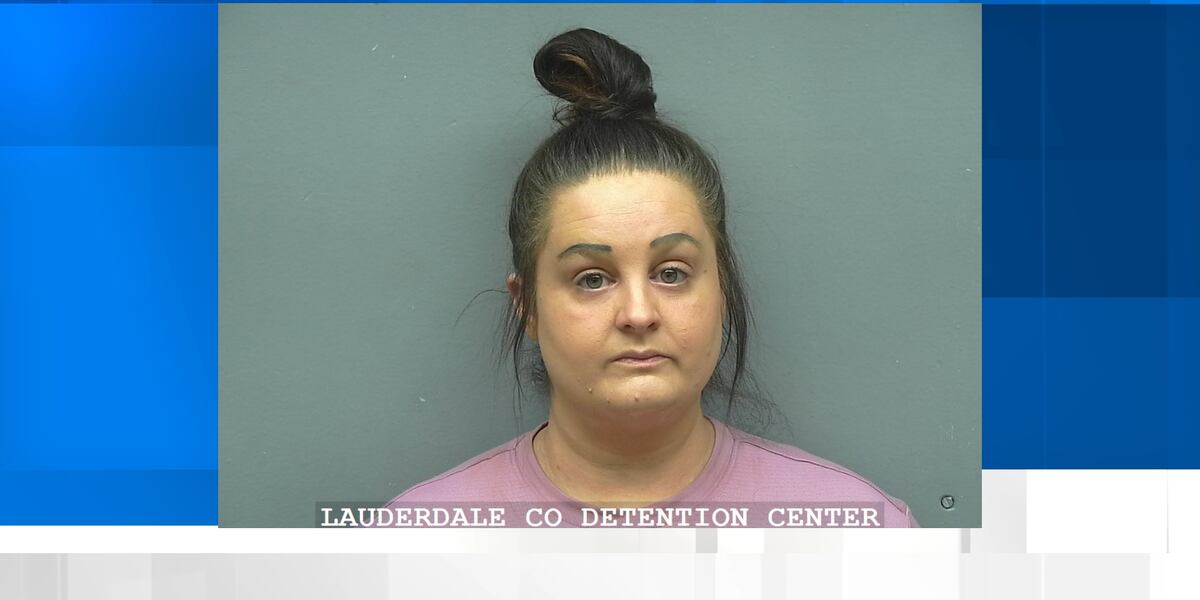
Bottom Line Up Front: Ashley Phillips, a Cash Express employee in Florence, Alabama, faces 51 counts of identity theft and one count of theft of property after allegedly stealing over $45,000 from dozens of customers by using their personal information to open fraudulent loans. This case reveals how predatory lending operations can become perfect cover for systematic identity theft.
The "So What" That Should Terrify You: Phillips was working at Cash Express in Florence and used client information to open new loans and keep the money for herself. She didn't hack a database or break into offices. She simply exploited the trust customers placed in a legitimate financial services company. Every time someone applied for a loan, they handed her everything she needed to steal their identity: Social Security numbers, addresses, employment information, and banking details.
The Criminal Psychology: This represents the industrialization of identity theft within the payday lending ecosystem. Phillips understood that Cash Express customers are typically financially vulnerable, making them less likely to immediately notice fraudulent activity and less able to fight back legally. She turned customer desperation into criminal opportunity, creating a systematic fraud operation disguised as normal business activity.
The Investigative Reality: The President of Cash Express saw that something was not adding up with how many loans were being taken out at that specific branch, so he made them do an audit The fraud was only discovered because of an unusual spike in loan volume, meaning Phillips had been successfully operating for months without detection. Florence Police took the case over in September 2023 to continue investigating... because we were waiting for more victims to come forward
Why This Matters: Payday lending and cash advance operations already exist in regulatory gray areas, serving customers who often have limited banking options. When employees at these businesses turn criminal, victims face a double victimization: first from the fraud itself, then from having their financial desperation exploited by someone they trusted to help them. With a $1.56 million bond, authorities clearly recognize this as serious organized financial crime.
The Fraudfather Bottom Line: When you're financially vulnerable enough to need payday loans, you're also vulnerable enough to become the perfect identity theft victim. The person processing your "emergency" loan application has everything they need to destroy your financial life, and you just handed it to them willingly.
The Laptop Farm: How North Korea Weaponized Remote Work Against America
Bottom Line Up Front: Christina Chapman received an 8-year federal prison sentence for operating a "laptop farm" that enabled North Korean IT workers to steal $17 million from over 300 U.S. companies using 68 stolen American identities. This wasn't just identity theft. It was state-sponsored economic warfare disguised as remote employment, with sophisticated device fraud techniques designed to defeat modern security systems.
The "So What" That Should Terrify You: Chapman operated a "laptop farm" at her home, where she would sign onto the U.S. companies' laptops in order to fake that the employees were actually working on American soil. She also shipped dozens of laptops and other tech abroad, including packages delivered to a Chinese city on the border of North Korea. When authorities raided her home, they found and seized more than 90 company devices. This operation was specifically designed to defeat device fingerprinting, a critical fraud control that tracks the unique digital signatures of computers and mobile devices to verify user identity and location.
The Criminal Psychology: This represents the evolution of identity theft into nation-state cyber warfare. Chapman understood that modern companies rely on device fingerprinting to detect fraudulent access, tracking IP addresses, browser configurations, hardware signatures, and geographic locations to verify legitimate users. By operating a physical "laptop farm" on U.S. soil while simultaneously shipping devices to North Korea, she created a hybrid fraud infrastructure that could bypass both location-based security and device authentication simultaneously.
The Device Fraud Sophistication: Device farming specifically targets the weakness in device fingerprinting technology. Security systems expect to see consistent device signatures from known locations, but Chapman's operation created false legitimacy by having actual company laptops physically located in Arizona while being remotely controlled by North Korean operatives. This defeats standard fraud controls that would flag unusual login locations or device inconsistencies, because the devices were genuinely where they appeared to be, even though the actual users were thousands of miles away.
The Investigative Reality: The scam involved 68 stolen U.S. identities, more than 300 American companies and two international businesses, including Fortune 500 companies: an American car maker, an aerospace manufacturer and a technology company in Silicon Valley. Even more alarming, North Korean workers using stolen identities had attempted to be employed at two different government agencies including U.S. Immigration and Customs Enforcement and the Federal Protective Service. The FBI calls this "one of the largest North Korean IT worker fraud schemes" they had ever charged.
Why This Matters: This case reveals how device farming can be weaponized to defeat the fraud controls that most companies rely on for remote worker verification. As businesses increasingly adopt remote work, they depend on device fingerprinting to ensure employees are who they claim to be and are working from approved locations. Chapman's laptop farm shows how sophisticated criminals can create fake digital presence that appears completely legitimate to security systems, turning America's own cybersecurity infrastructure against itself.
The Fraudfather Bottom Line: When hiring remote workers, companies aren't just trusting individuals, they're potentially hiring entire nation-states. Device fingerprinting can be defeated by anyone willing to operate physical infrastructure that makes foreign operatives appear to be domestic employees, and your "trusted" remote worker might be funding nuclear weapons programs.


The Fraudfather combines a unique blend of experiences as a former Senior Special Agent, Supervisory Intelligence Operations Officer, and now a recovering Digital Identity & Cybersecurity Executive, He has dedicated his professional career to understanding and countering financial and digital threats.
Fast Facts Regarding the Fraudfather:
Global Adventures: He’s been kidnapped in two different countries, but not kept for more than a day.
Uncommon Encounter: Former President Bill Clinton made him a protein shake.
Unusual Transactions: He inadvertently bought and sold a surface-to-air missile system.
Perpetual Patience: He spent 12 hours in an elevator.
Unique Conversations: He spoke one-on-one with Pope Francis for five minutes using reasonable Spanish.
Uncommon Hobbies: He discussed beekeeping with James Hetfield from Metallica.
Passion for Teaching: He taught teenagers archery in the town center of Kyiv, Ukraine.
Unlikely Math: Until the age of 26, he had taken off in a plane more times than he had landed.
This newsletter is for informational purposes only and promotes ethical and legal practices.